

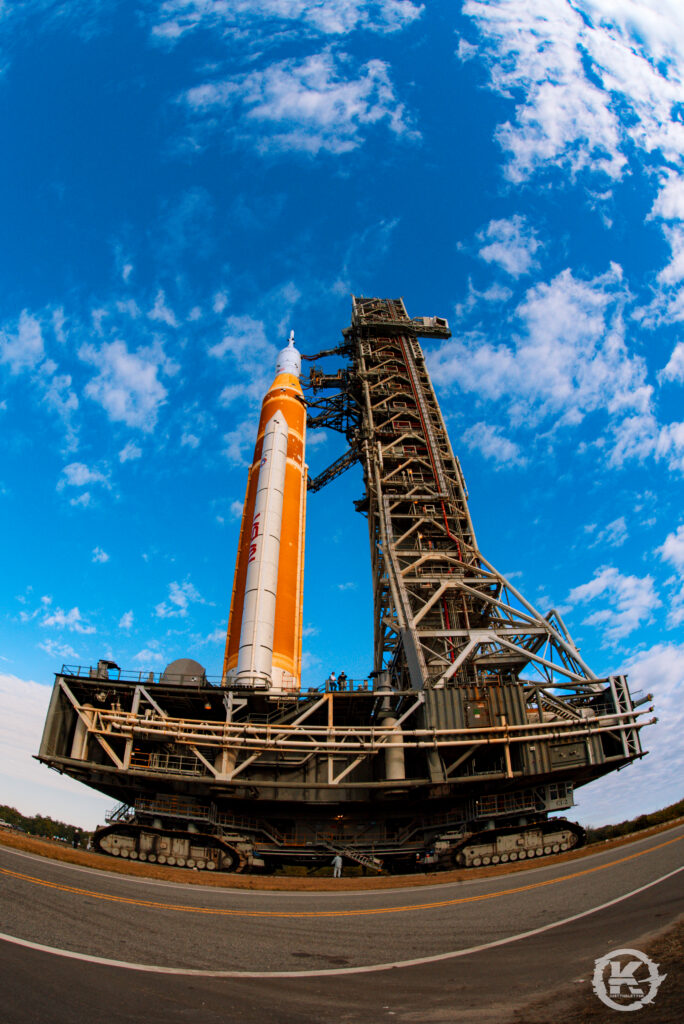
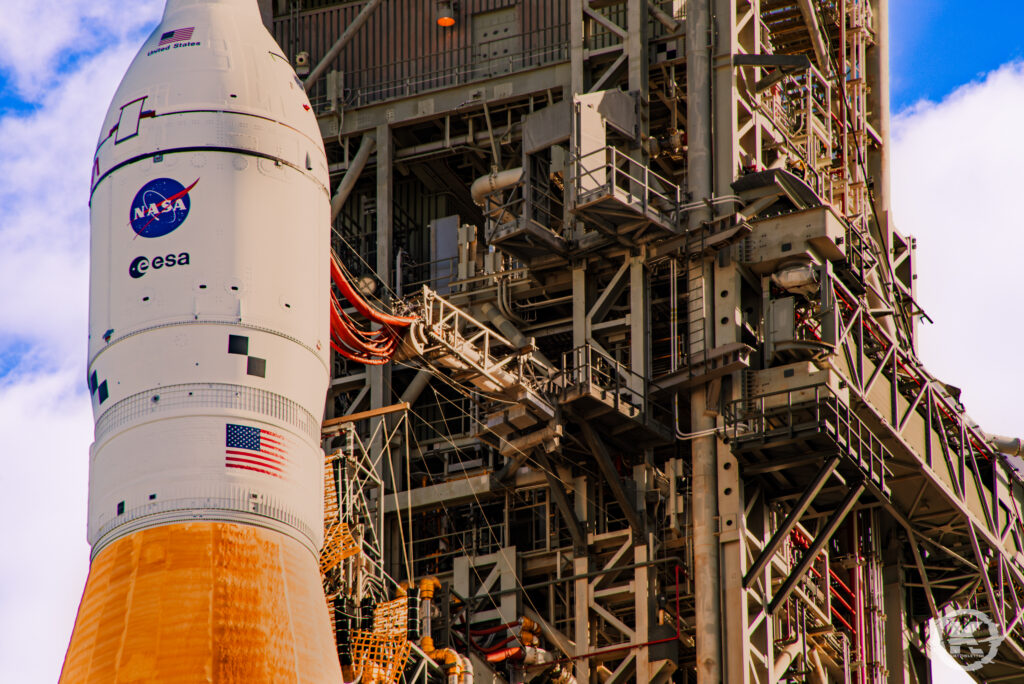
On January 17th, 2026 NASA’s Artemis II Space Launch System (SLS) rocket and Orion spacecraft exited the Vehicle Assembly Building (VAB) to begin a 12 hour journey, atop Crawler-Transporter 2, to reach Kennedy Space Complex’s launch pad 39B, for integration tests.
Documentary filmmaker and photographer K Enagonio was onsite to capture the rollout, both digitally as well as on film. Given that this would be the first manned lunar mission since Apollo 17, back in 1972, K wanted to create an essence of nostalgia by capturing this ship on 35mm film.
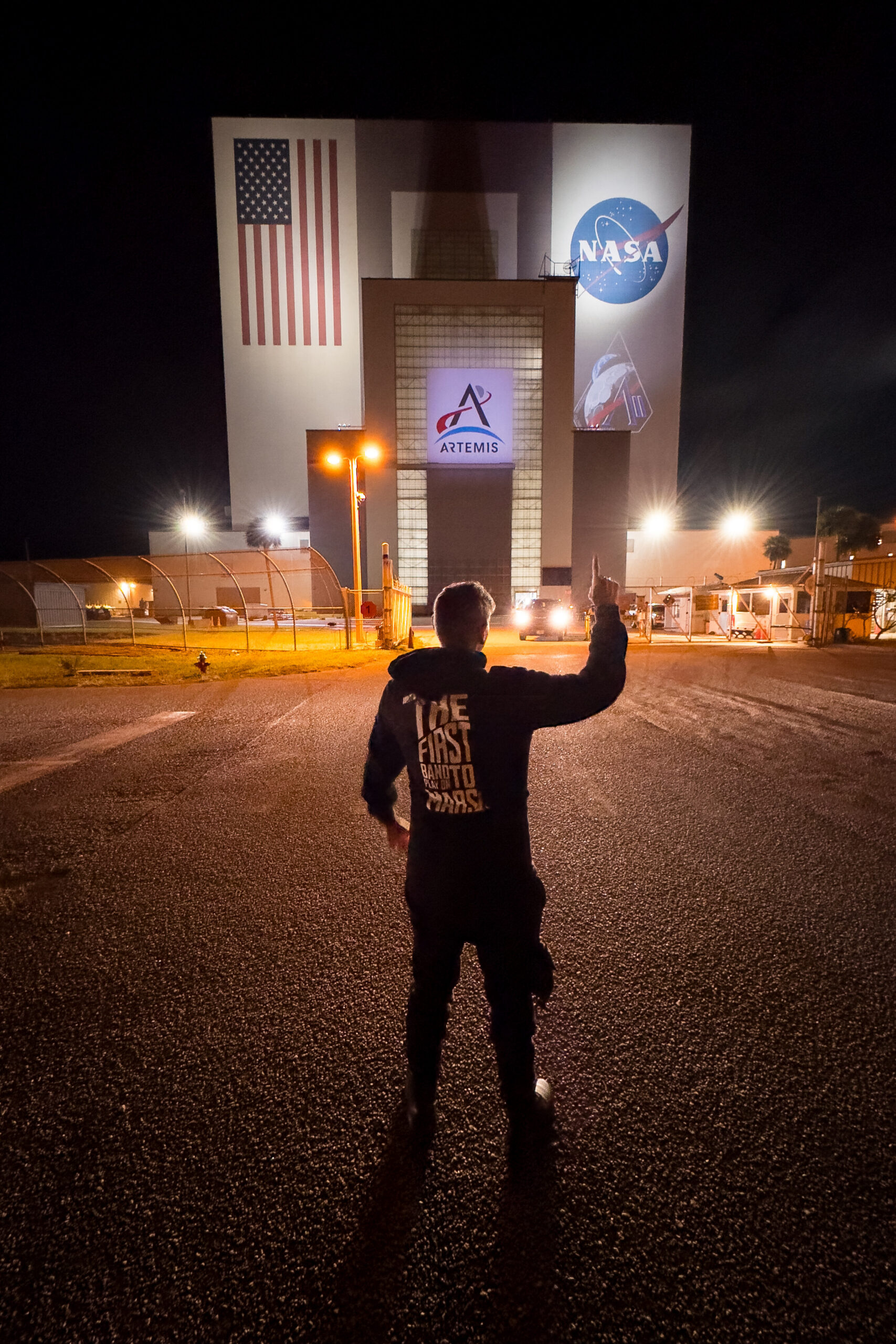
Waking up before the sun to capture history will give you more energy than any amount of caffeine. I never thought I’d get to witness a lunar mission in my lifetime, because I thought we had all but given up on the possibility of deep space exploration. That is, until I began documenting SpaceX’s Starship test flights back in early 2024 for Interstellar Gateway, a media team that I had the pleasure of helping bring together through connections I’d made over the years.
Capturing Artemis II felt like the beginning of something that would change my life, forever. I understood the gravity of covering every aspect of this launch that I was able to. I reached out to some friends I had made on the integrations team at Amentum, who brought me along as a guest to witness this rollout.
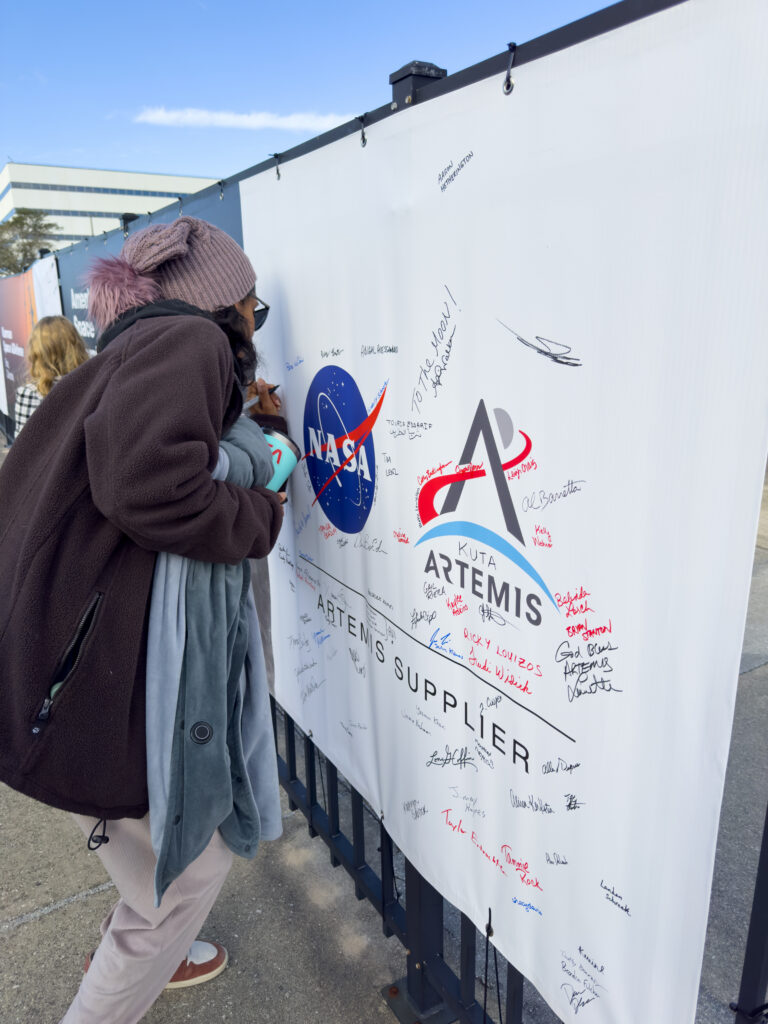
If you’re unfamiliar with how NASA is able to get their vehicles off the ground, let me fill you in. NASA works with multiple external aerospace companies to make these launches happen. Some of these include Boeing, Northrop Grumman, Lockheed Martin, and Amentum. There are a few reasons for this; NASA relies on taxpayer funds to operate, and in order to secure that funding they make an effort to encourage engineering and manufacturing facilities from around the country to build systems and components for these missions.
Logistically speaking, there’s no practical reason for there to be aerospace companies in states like Ohio or Chicago, because NASA launches out of Florida, but the state representatives are much more likely to prioritize funding for NASA if the citizens of their state are being financially taken care of. Additionally, by purchasing hardware and services from outside contractors, NASA can focus more on mission design, research, testing, and oversight. Not to mention that commercial companies often develop new technologies faster, becasue they can use them for other customers and commercial markets. Competition between contractors can also reduce costs and improve performance.
After getting setup at the nearby viewing site, we waited to catch the first glimpse of SLS and Orion exit the VAB, and at 7:04 a.m. EST, first motion officially began, at the blistering speed of 1 mph.
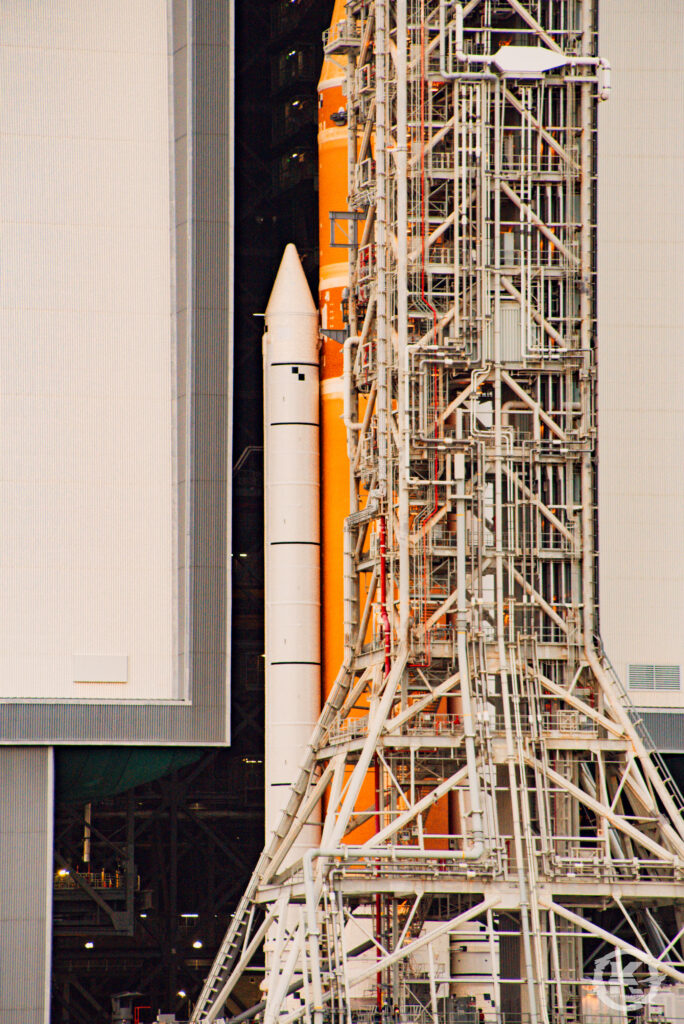
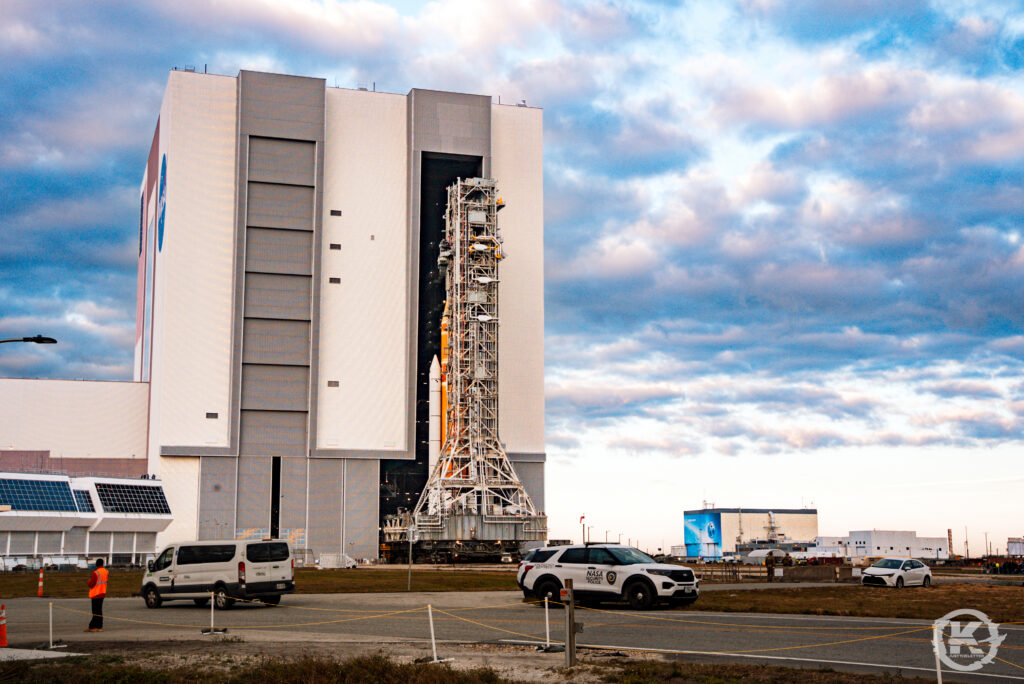
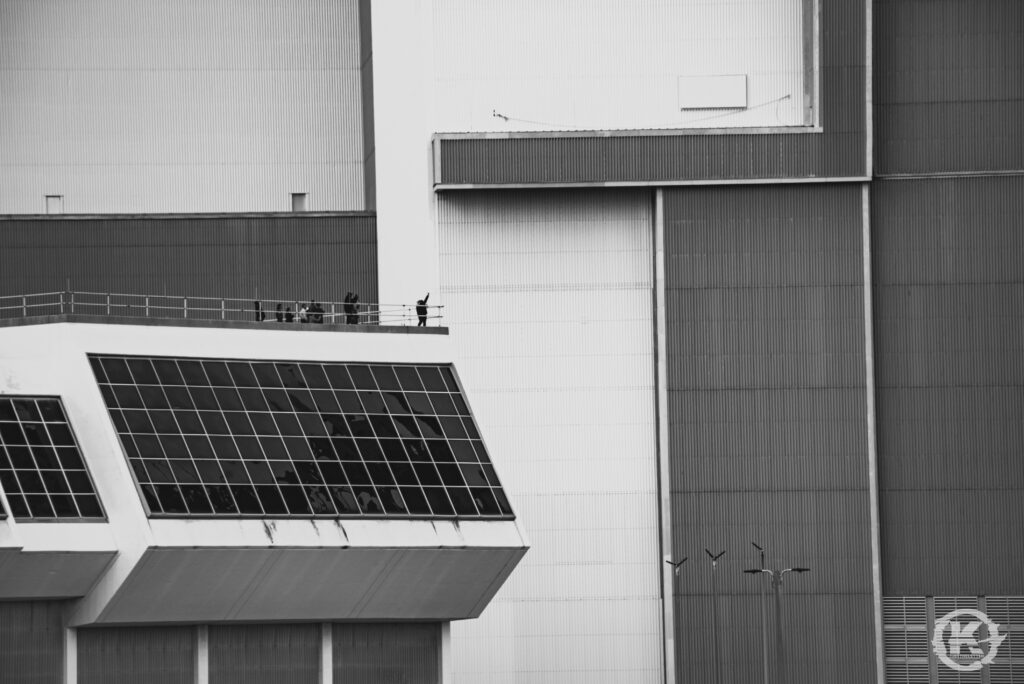
As I was capturing SLS leave the VAB I noticed that the Artemis II crew was standing on the nearby LCC rooftop, admiring their launch vehicle and taking some photos with their families.
As the crawler inched its way toward pad 39B, the air became electric with the excitement of the different NASA contractor teams and their families. Children ran around in their space suits, people shared their Artemis II build stories with their loved ones, and the crew that rode aboard the crawler smiled and waved as they passed by.
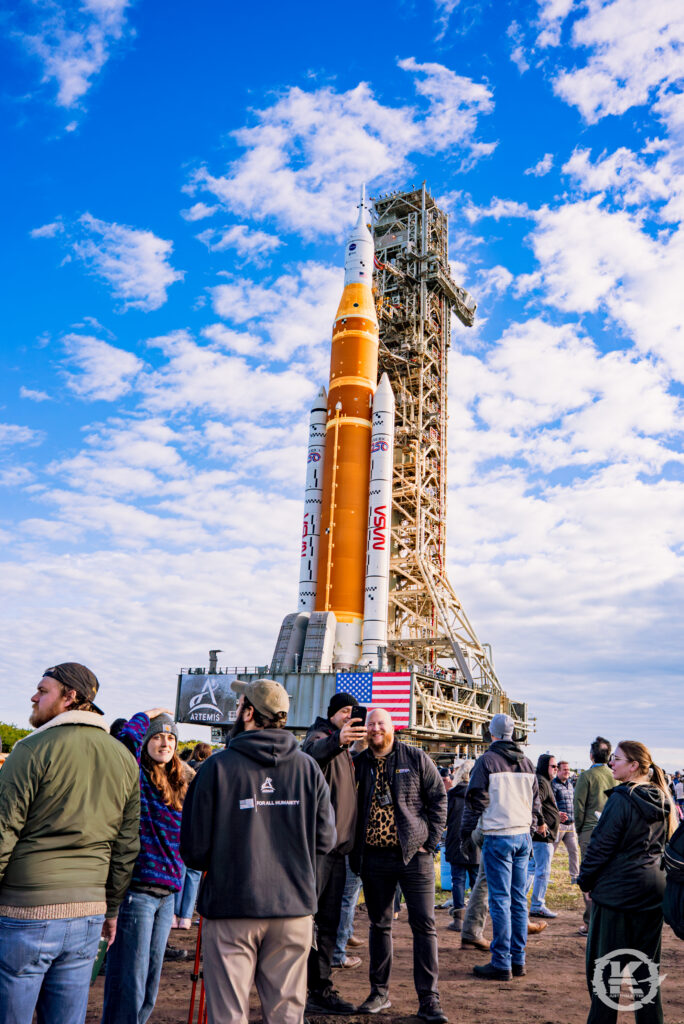
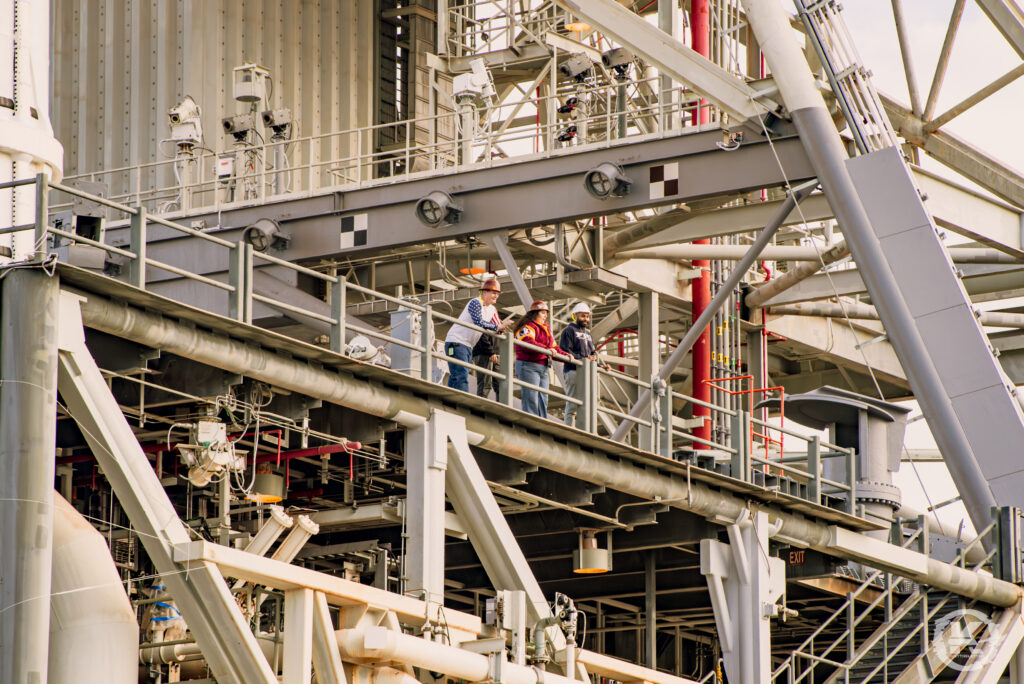
I’d like to note that TSA decided to cook my film after this trip.. They don’t seem to understand that if you keep scanning film through the X-Ray that it essentially gives it the “Chernobyl treatment..” I still think my film scans turned out to be pretty unique, given the historic nature of this rollout.
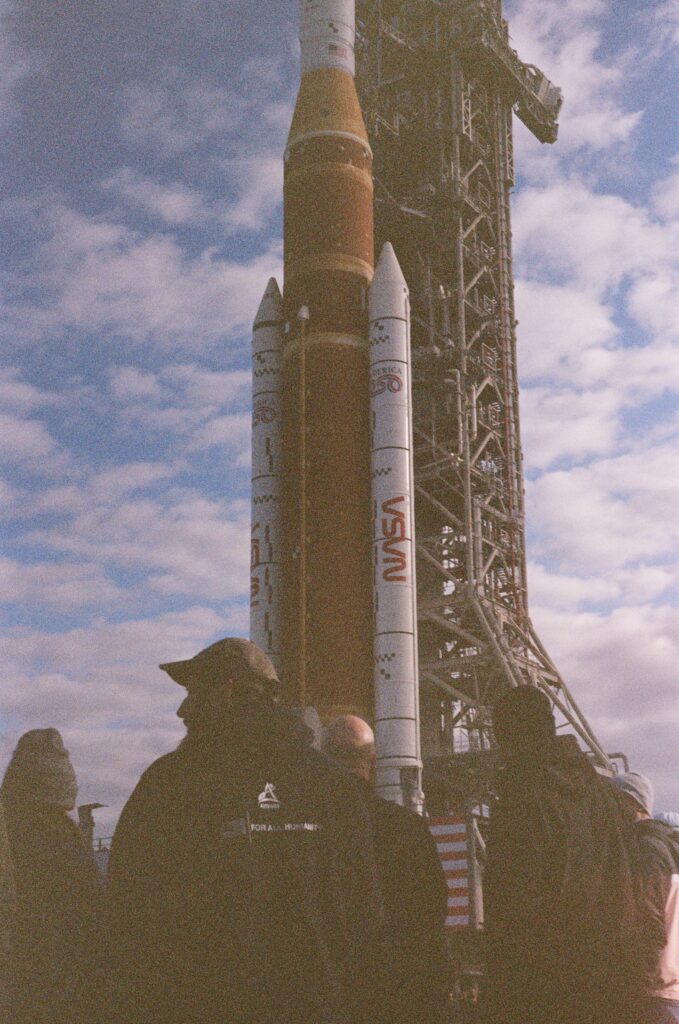
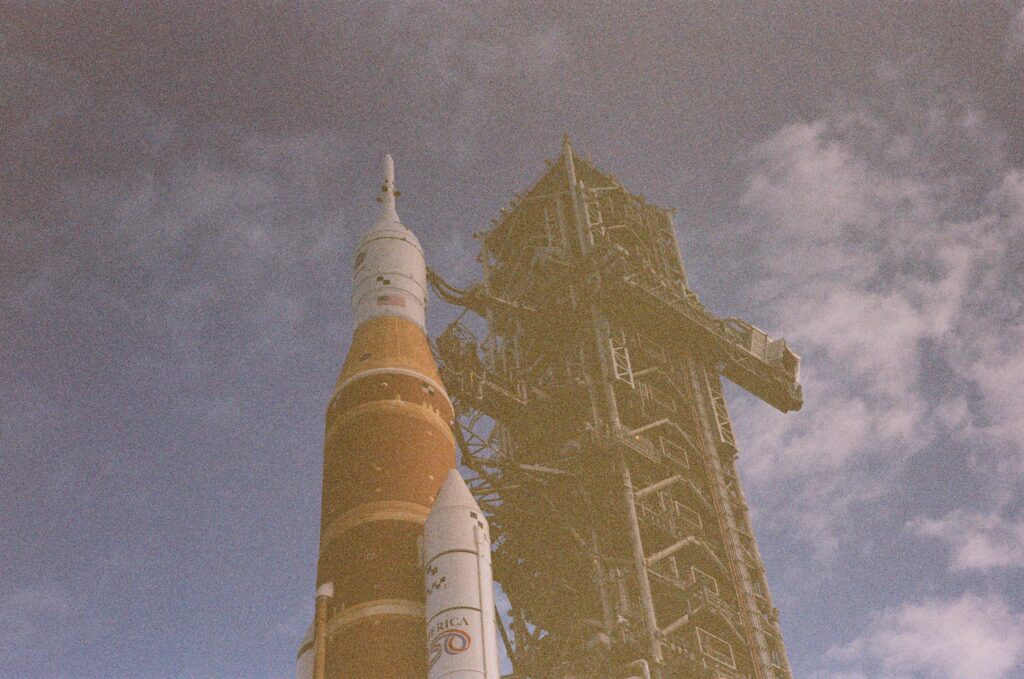
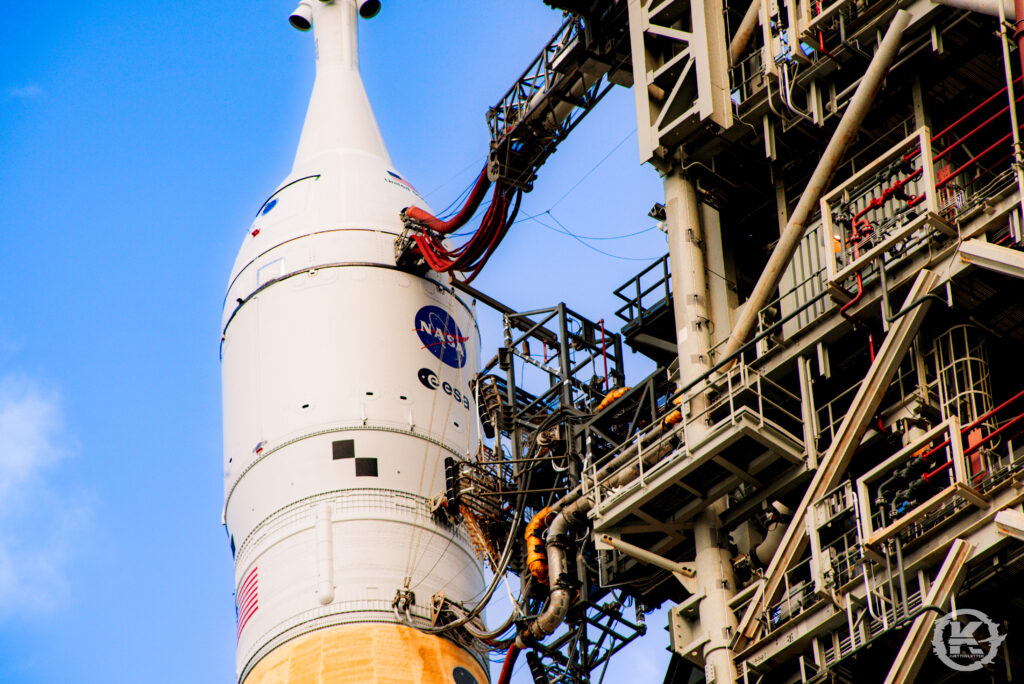
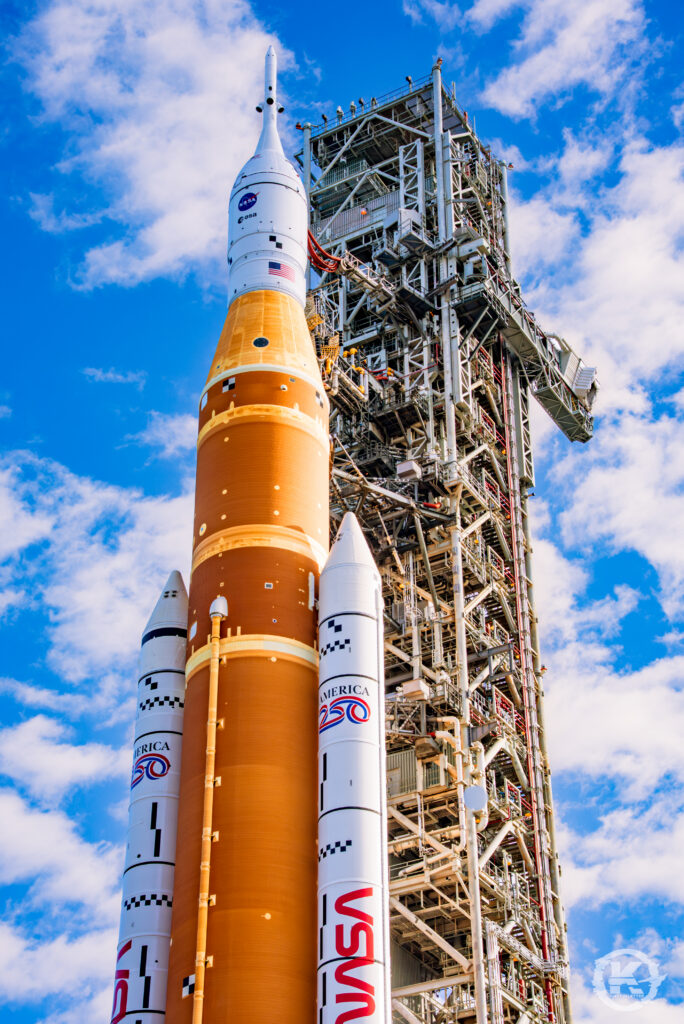
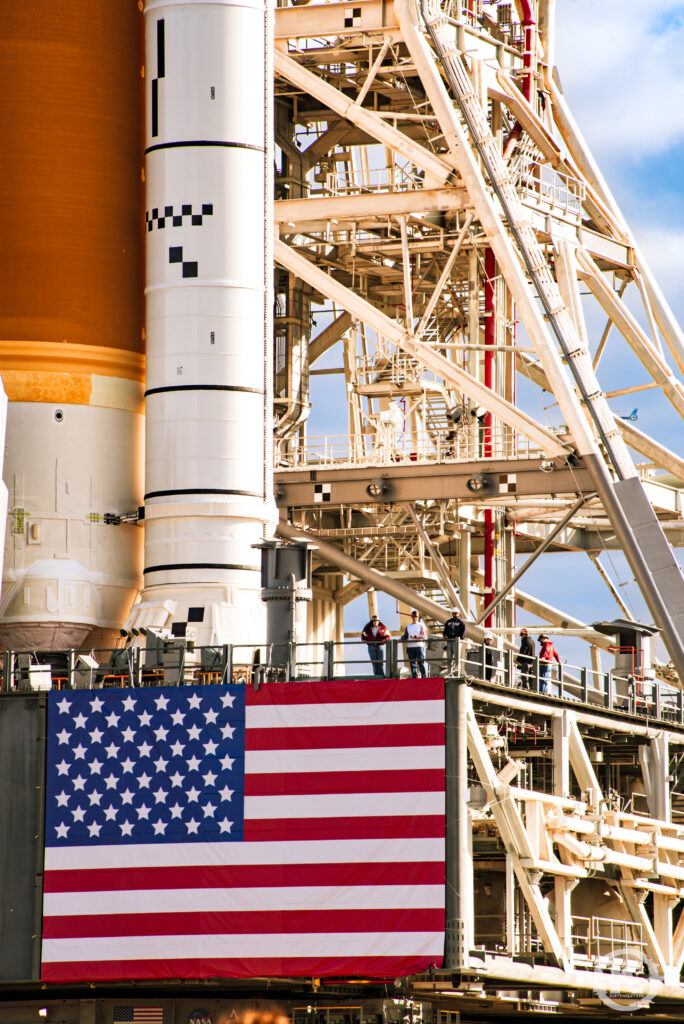
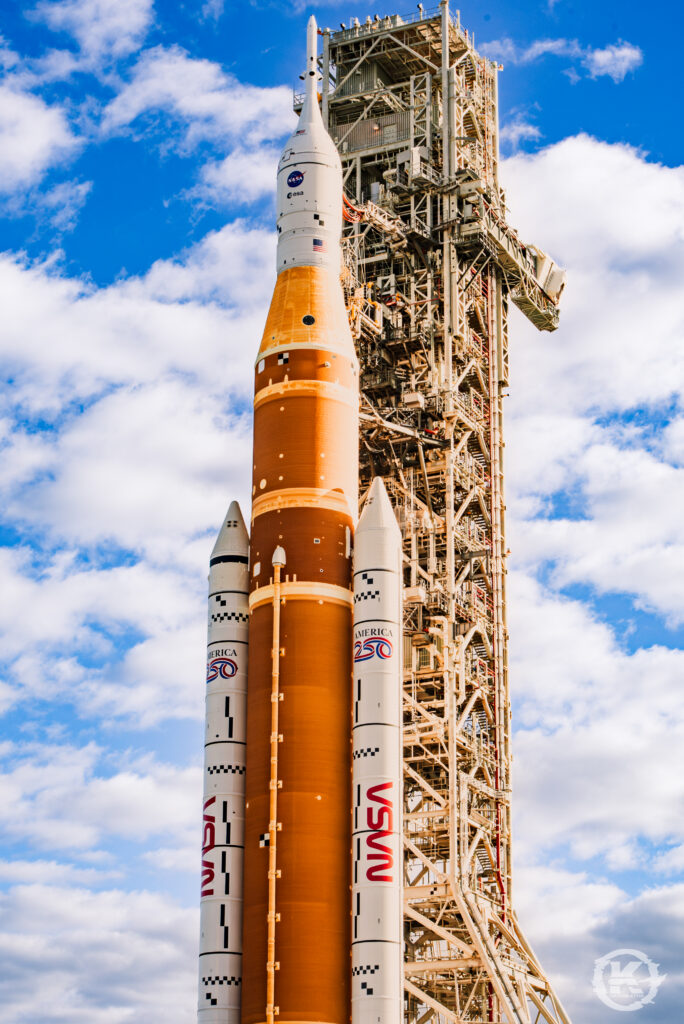
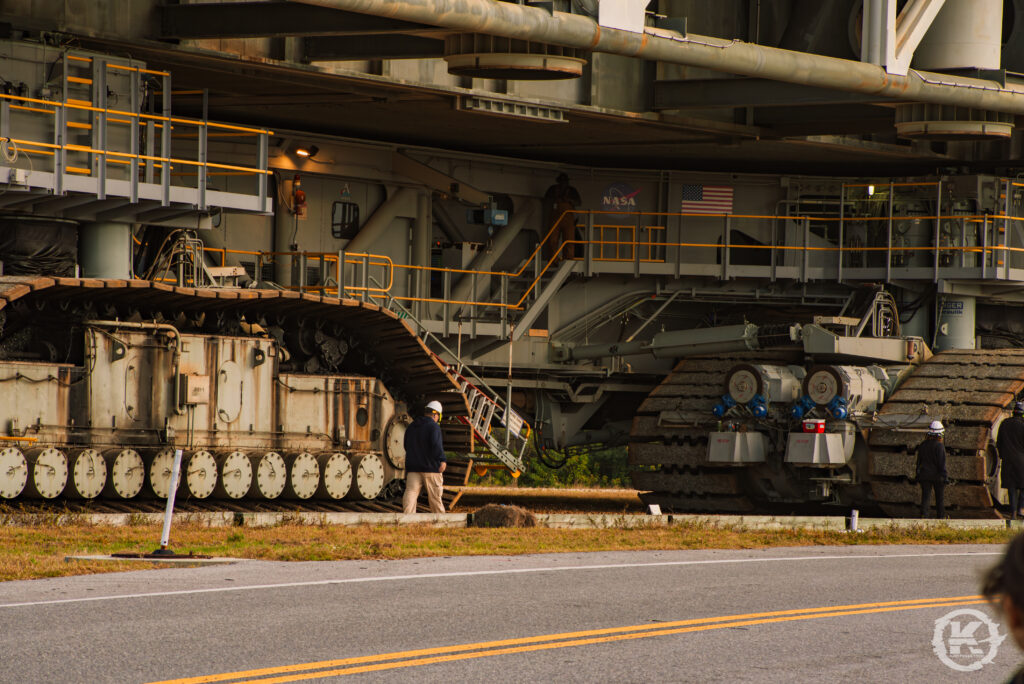
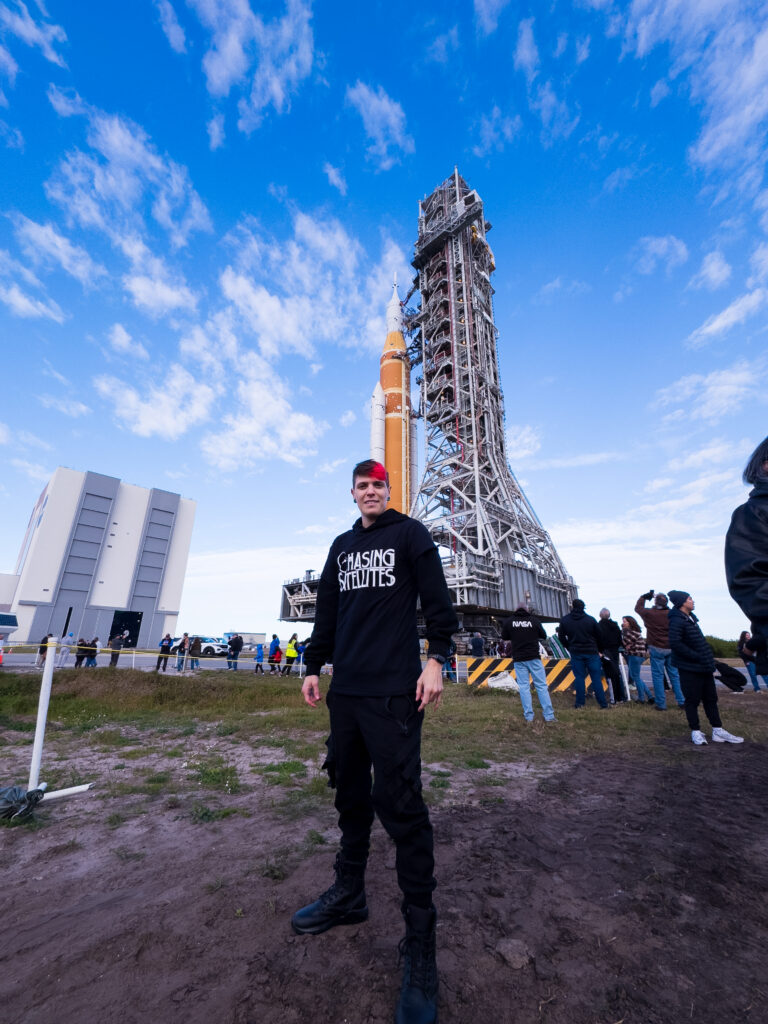
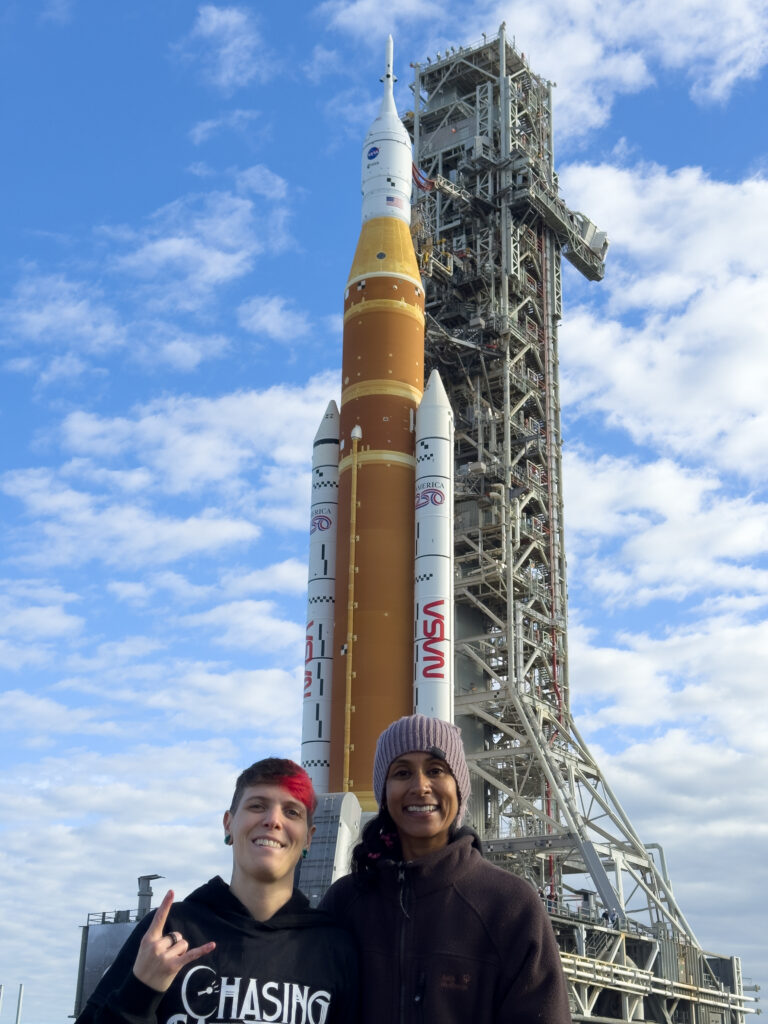
If you’re wondering how big the crawler transporter is, here’s a “human for scale” image. Let’s zoom out a bit, to see the full scale of SLS and Orion atop the transporter.
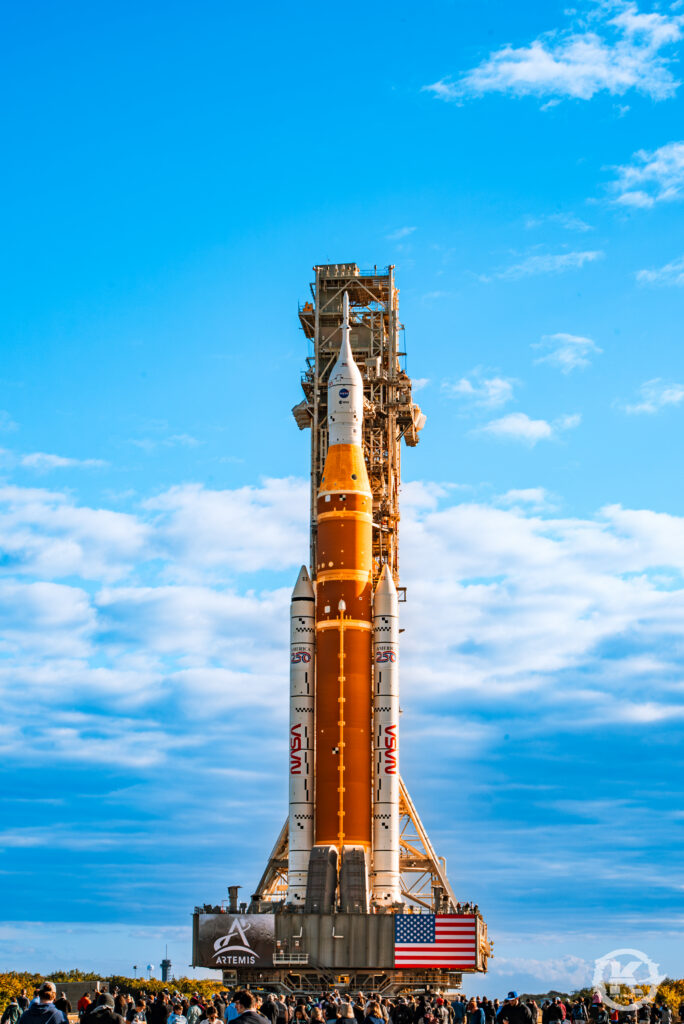
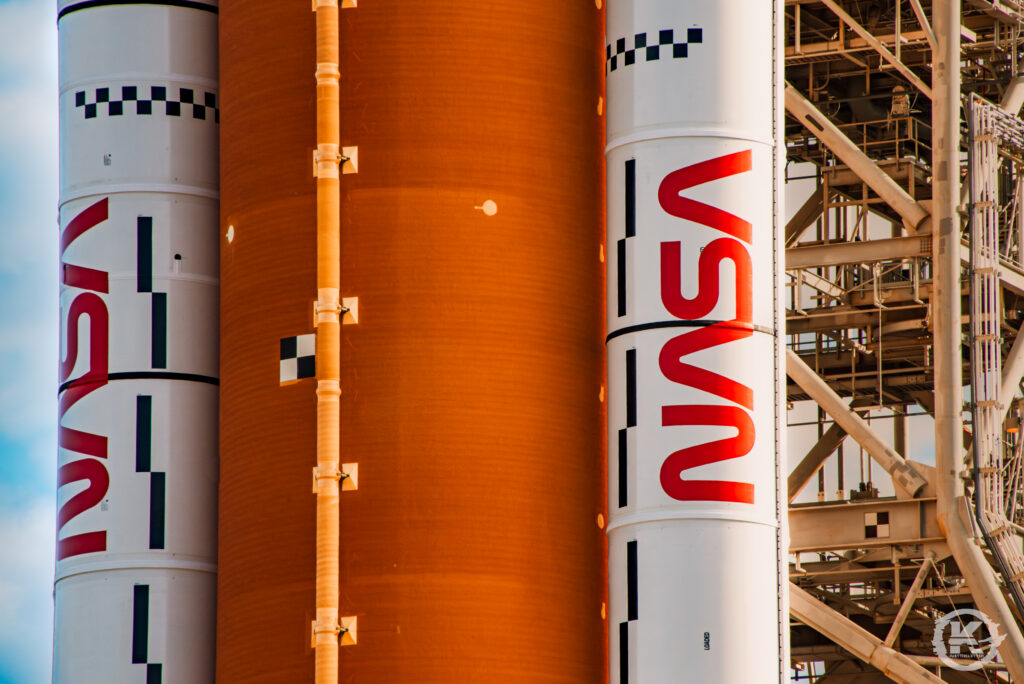
I was amazed at the beauty of this orange rocket and the insane amount of detail that went into creating it. It’s not only a feat of engineering, but it’s also a beautiful piece of art that so many talented human hands were a part of creating, together.
Once the 322-foot SLS stack made it to Launch Pad 39B the teams discovered a leaky seal as well as an issue with helium flow on the ship. Artemis II had to be returned to the VAB to troubleshoot the issues and replace the faulty seal.
The mission ultimately proceeded to its April 1, 2026 launch window, which I also couldn’t miss.
Watch K’s Behind the Scenes video from their time documenting Artemis II’s rollout: